… Calls for Return to Enlightened Leadership in Nigeria
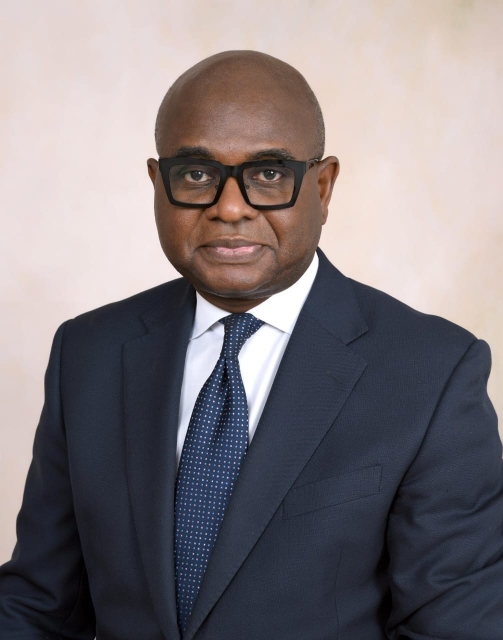
Former presidential candidate of the Young Progressives Party (YPP) and former Deputy Governor of the Central Bank of Nigeria (CBN), Dr. Kingsley Moghalu, has lamented what he described as the elite capture of political power and the steady decline of governance in Nigeria.
Moghalu made his remarks via his official X (formerly Twitter) account, where he blamed Nigeria’s stagnation on a political class more interested in power acquisition and self-enrichment than effective governance.
According to him, “What has happened to Nigeria and stymied our country’s progress is the capture of power by a political elite focused on primitive accumulation from power, and on the politics that brings power through means fair and foul, but not on GOVERNANCE.”
He further argued that this political elite has deliberately sidelined the nation’s intellectual and professional class, both at home and in the diaspora, whom he described as critical to national development.
“This political elite has waged a war of exclusion against the real elite in Nigeria, those with capacity and motivation, that could have moved the country forward. This is the intellectual and professional class in Nigeria and the diaspora, now an endangered species,” he stated.
Reflecting on Nigeria’s historical trajectory, Moghalu noted that the country made measurable progress up until the 1970s, when governance was driven by capable elites despite internal divisions such as the civil war.
“I say this because up to the 1970s Nigeria was making real progress, and the real elite class was in control even with divisions amongst them (e.g. the civil war). From the 1980s progress began to stall,” he wrote.
He acknowledged that military regimes attempted reforms and made infrastructure gains but said internal contradictions hindered the establishment of a sustainable political foundation.

Commenting on the return to civilian rule in 1999, Moghalu observed that although there were signs of renewed progress under President Olusegun Obasanjo, a new class of political actors had already emerged.
“From 1999 with the Obasanjo presidency, it seemed as if we were back on track, but a new class of ‘political entrepreneurs’ had firmly arisen,” he said.
He added that while Obasanjo balanced technocrats and political interests, the situation deteriorated significantly from 2015.
“From the Buhari presidency in 2015 the political entrepreneur class became FULLY in charge of Nigeria, and the technocratic elites were relegated. Nigeria went into a downward spiral in terms of capture by corrupt, self-entitled political cabals. We have not recovered. Some would argue it has only gotten worse,” Moghalu wrote.
The former CBN deputy governor also criticised the absence of strategic thinking in governance, citing Nigeria’s prolonged lack of ambassadors as an example.
“No serious thinking is going on, because thinkers were persona non grata. That’s why we went for two years without Ambassadors. That was not ‘important’. Politics was,” he stated.
Warning that nations cannot develop without competent leadership, Moghalu said, “No country can rise on the back of empty political buccaneers focused only on self-enrichment and power as an end in itself.”
He called for a national rebirth anchored on enlightened leadership and strong institutions.
“For Nigeria to rise again, an age of enlightenment must return, under enlightened leaders with the vision, intellect, experience, motivation and competence to GOVERN and create transformation,” he said, adding that this would require “a restoration of institutions such as a truly independent legislature, judiciary and rule of law, transparency and accountability,” which he described as “the cornerstones of development.”